
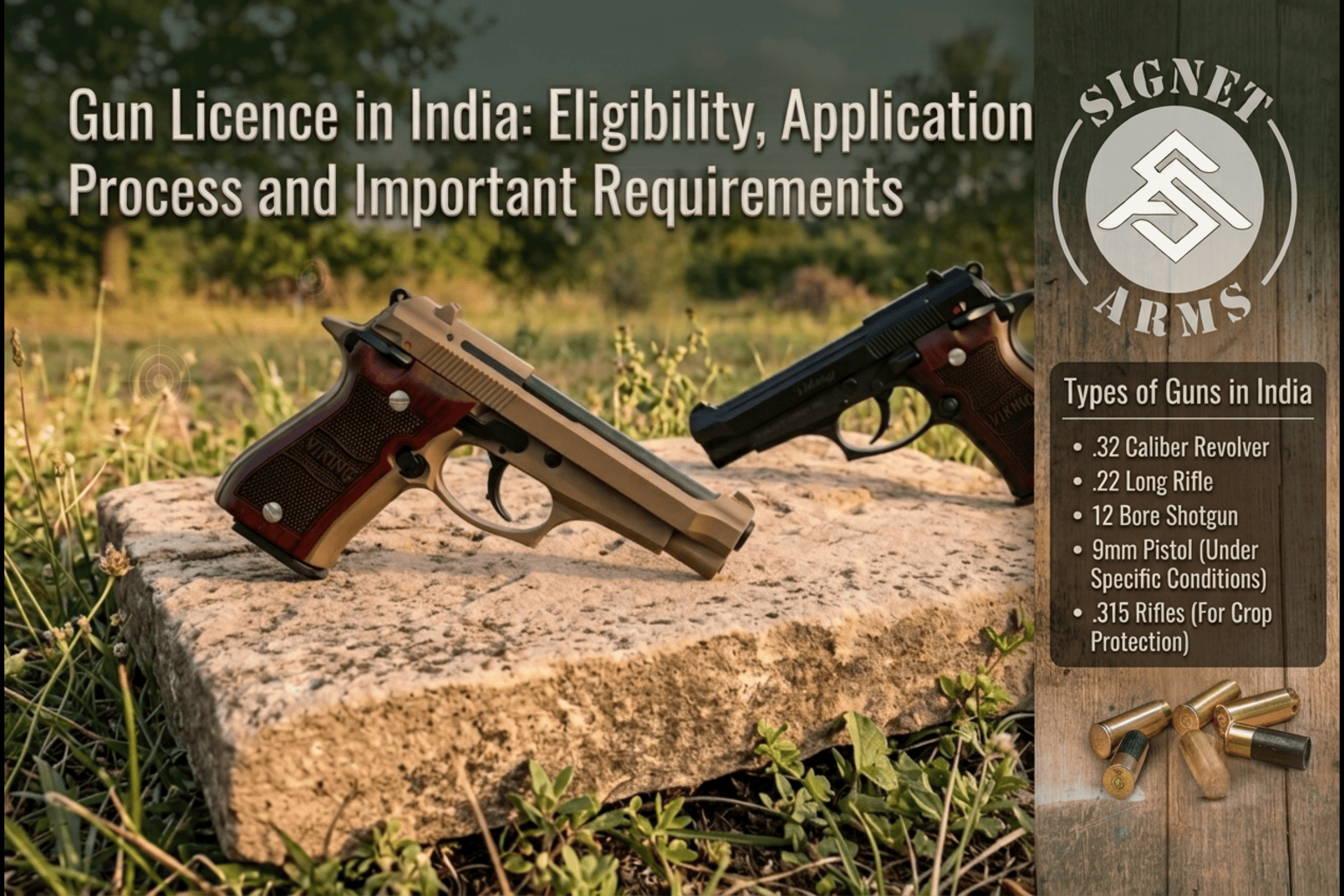
Getting a Gun Licence in India is a regulated legal process, not simply a matter of choosing a firearm and applying for permission.
The process is governed mainly by the Arms Act, 1959 and the Arms Rules, 2016, with the licensing authority assessing the applicant’s eligibility, reason for seeking a licence and other prescribed requirements.
In this article, we’ll look at Gun Licence eligibility, the general gun licence application process, important documents and checks involved, common reasons an application may face difficulties, and the responsibilities that come with holding a licence.
What Is a Gun Licence in India?
A Gun Licence is legal permission granted by the competent licensing authority to possess and use a firearm under specified conditions.
Simply owning or possessing a firearm without the required licence can attract legal consequences under India’s arms laws.
The Ministry of Home Affairs states that firearm licensing is governed by the Arms Act, 1959 and the Arms Rules, 2016.
The exact licensing authority and requirements can vary depending on the category of firearm and the circumstances of the applicant.
Why Is a Licence Required?
The licensing system is intended to regulate the possession, acquisition and use of firearms. A licence does not mean that a person can use a firearm without restrictions.
The licence covers the particular person and the arms or ammunition specified in it, and the holder must follow applicable conditions.
Gun Licence Eligibility in India
One of the first questions applicants usually have is about Gun Licence eligibility. There is no blanket rule that every adult applicant will automatically receive a licence.
The licensing authority considers whether the applicant has a legitimate reason for seeking the firearm and whether the statutory requirements are satisfied.
Under Section 13 of the Arms Act, a licence may be granted where the authority is satisfied that the applicant has a good reason for obtaining it, subject to the applicable provisions and conditions.
What Can Be Considered a Good Reason?
Depending on the circumstances, legitimate reasons can include personal protection, sport shooting or certain permitted occupational or other purposes. However, having a stated reason alone does not guarantee approval.
The authority may also consider the applicant’s background, circumstances and other information available during the verification process.
Gun Licence Application Process
The gun licence application process involves submitting the prescribed application and completing the verification and assessment requirements.
1. Submit the Application
Applicants generally need to submit the prescribed application through the applicable government licensing system or authority.
The Ministry of Home Affairs has established the NDAL-ALIS system for arms licensing-related services.
The application requires personal and other relevant information. Applicants should provide accurate details and ensure that supporting documents are complete.
2. Provide the Required Documents
Depending on the application and local requirements, applicants may be asked to provide identity, address, age and other supporting documents.
Additional documents may be required depending on the purpose for which the licence is sought.
It is important to check the latest requirements applicable to your jurisdiction rather than relying on an old checklist found online.
3. Police Verification and Assessment
Police verification can form an important part of the licensing process. The authorities may examine the applicant’s background and circumstances before a decision is made.
The licensing authority then considers the application, verification information and applicable legal requirements before deciding whether the licence can be granted.
Important Requirements for a Gun Licence
Beyond submitting an application, applicants should understand that obtaining a Gun Licence in India comes with continuing legal responsibilities.
Accurate Information Matters
All information submitted during the application should be truthful and consistent with the supporting documents.
Providing incorrect or misleading information can create serious problems during the licensing process.
Follow Licence Conditions
A licence is not unrestricted permission to possess or carry a firearm anywhere. The Arms Rules specify conditions applicable to licence holders, and firearms covered by a licence may be subject to inspection and other regulatory requirements.
Understand Local Requirements
Some procedural details can depend on the relevant licensing authority and the applicant’s circumstances. Therefore, applicants should always verify the current requirements with the appropriate authority before submitting an application.
Common Mistakes Applicants Should Avoid
The process can become unnecessarily complicated when applicants rely on outdated information or incomplete paperwork.
- A common mistake is assuming that being eligible to apply means approval is guaranteed.
- Another is submitting inconsistent personal information or failing to provide documents requested by the licensing authority.
- Applicants should also avoid treating information from unofficial websites, dealers or social media posts as the final legal position.
The Ministry of Home Affairs publishes the relevant rules and official information, including the Arms Rules, 2016 and FAQs relating to arms licensing.
You can also contact Signet Arms to get help regarding Gun License in India
FAQs About Gun Licence in India
1. Is a Gun Licence mandatory in India?
For firearms covered by the licensing requirements of the Arms Act, possession generally requires the appropriate licence.
The exact requirements depend on the firearm and applicable legal provisions.
2. Does everyone who applies for a Gun Licence get one?
No. Submitting an application does not guarantee approval. The licensing authority assesses the application, the applicant’s circumstances, verification information and applicable legal requirements.
3. What is the main law governing firearm licences in India?
The primary legislation is the Arms Act, 1959, supported by the Arms Rules, 2016. The Ministry of Home Affairs publishes the relevant rules and official guidance.
4. Can a Gun Licence be used as unrestricted permission to carry a firearm?
No. A licence comes with specific legal conditions. Licence holders must comply with the conditions attached to their licence and applicable provisions of the Arms Act and Arms Rules.
5. Is police verification part of the process?
Police verification and background assessment can form part of the licensing process. The precise procedure depends on the application and competent licensing authority.
6. Where can I check the latest Gun Licence requirements?
Applicants should refer to the official Ministry of Home Affairs resources and the applicable government licensing system rather than relying solely on third-party websites.
The MHA maintains information on the Arms Rules and NDAL-ALIS.
Conclusion
Applying for a Gun Licence in India is a formal legal process designed to ensure that firearm possession is properly regulated.
From establishing Gun Licence eligibility and providing accurate documents to completing verification and complying with licence conditions, every stage matters.
The safest approach is to use current information from the competent government authority and understand the applicable provisions before submitting an application.
Because firearms laws and administrative requirements can change, always verify the latest rules before taking any action.